Almost every visitor to Panglao does the countryside tour, and almost everyone does it the same way: a van at 8 AM, eight stops, back by five. It is a good day. It is also a day where two of the stops are worth an hour each and two are worth about four minutes, and nobody tells you which is which until you are standing there.
This is the stop-by-stop version, with driving times from Panglao rather than from Tagbilaran, because that is where you are actually starting from.
What the standard tour is
The classic loop runs east and north out of Tagbilaran and comes back the same way. Blood Compact Shrine, Baclayon Church, a tarsier sanctuary, lunch on the Loboc River, the man-made forest, a butterfly centre, and the Chocolate Hills. Some operators add a python or a hanging bridge.
From Panglao you cross the two bridges to the mainland first, which adds about 30 minutes at the start and the end. Total distance is roughly 160 kilometres round trip. Plan for nine hours door to door, not the six the itinerary implies.
The stops, in the order you will do them
Blood Compact Shrine, Tagbilaran
About 40 minutes from Danao. A bronze sculpture of the 1565 blood pact between Miguel López de Legazpi and Datu Sikatuna, on a small terrace by the road with a sea view behind it.
Historically it matters. As a stop it is four minutes and a photograph. Nobody has ever wished it were longer. Do not let anyone build a schedule around it.
Baclayon Church
One of the oldest stone churches in the Philippines, coral blocks, built by the Jesuits in the 1700s. It was badly damaged in the 7.2 magnitude earthquake of October 2013 and has since been restored.
Worth 30 to 40 minutes, and worth paying for the small museum, which holds religious artefacts and vestments going back centuries. This is the stop most tours rush and most people say afterwards they wish they had had longer at. Dress modestly, shoulders and knees covered.
The tarsiers, and which sanctuary you go to
This is the one place on the loop where the choice of operator genuinely matters, so it is worth being specific.
Go to the Philippine Tarsier Foundation sanctuary in Corella, about an hour from Panglao. It is a forest enclosure where guides walk you along a trail and point out tarsiers sleeping in the trees. There are roadside operations near Loboc that keep tarsiers in far smaller enclosures much closer to the crowds. They are cheaper and quicker and some tours default to them.
Tarsiers are nocturnal, weigh around 120 grams, and are severely stress-sensitive. Under stress in captivity they are known to injure themselves. The rules at Corella exist for that reason: no flash, no touching, no raised voices, stay behind the markers. If your guide is relaxed about any of those, you are in the wrong place.
Ask your driver directly, before the day starts, which sanctuary they are taking you to. Say Corella.
The Loboc River lunch cruise
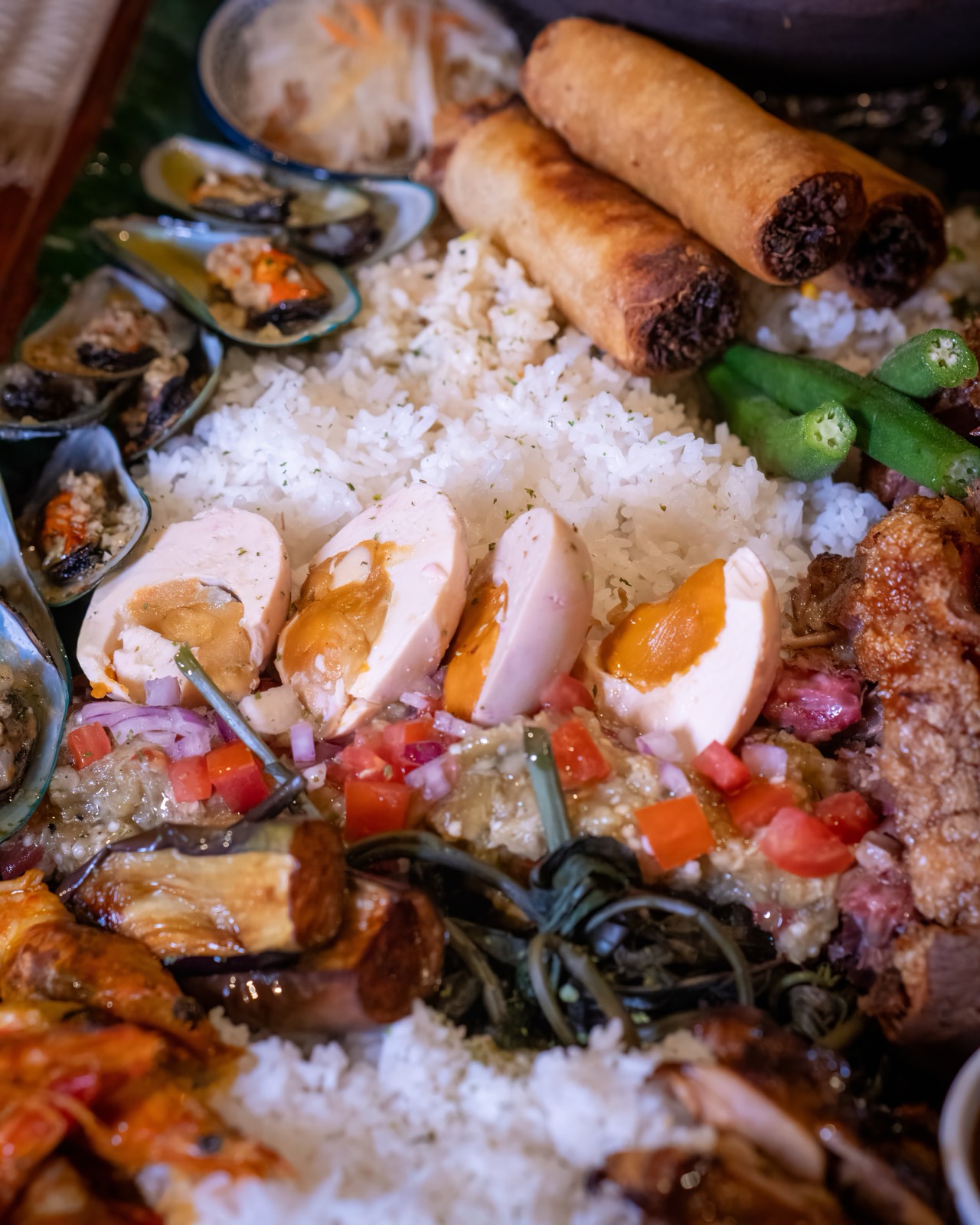
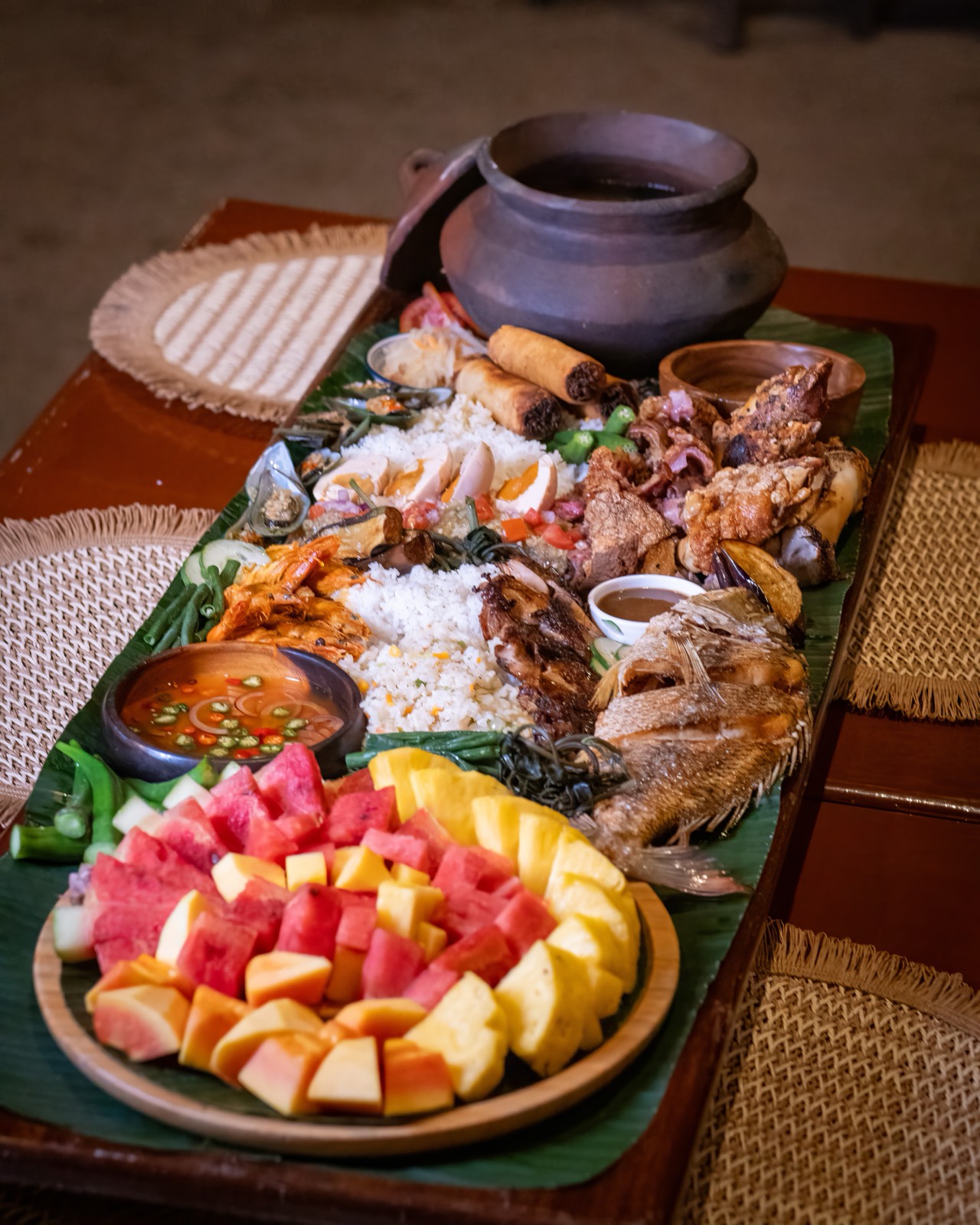
About an hour and fifteen from Panglao. A floating bamboo platform pushed by a small boat, a buffet of Filipino food, and a guitarist, drifting an hour upriver and back through jungle to a small waterfall.
It is unashamedly touristy and it is also genuinely lovely, especially with children or with grandparents who are not going to enjoy a hike. The food is average. The river is not. Budget roughly ₱600 to ₱850 per person.
Go early if you can. The 11 AM sittings are calmer than the 1 PM ones.
The man-made forest, Bilar
A two-kilometre stretch of mahogany planted in the 1960s, dense enough that the temperature visibly drops as you drive into it. It is free, it takes ten minutes, and it is one of the better photographs of the day.
It is a drive-through, not a walk. Have the driver stop rather than assuming they will.
The butterfly centre
Small, quick, mildly interesting, and the least essential paid stop on the loop. If you are running late for the Chocolate Hills light, this is the one to drop.
The Chocolate Hills, Carmen
The reason the day exists. Somewhere over 1,200 limestone hills, near identical in shape, spread across a plain. The main viewing deck in Carmen is up a long flight of steps, and the view from the top is genuinely unlike anywhere else.
Timing changes this stop completely. The hills only turn the brown that gives them the name in dry season, roughly February through May. In the wet months they are green, which is beautiful and not what the postcards show. Late afternoon light is much better than midday, and midday is when the standard tour arrives.
It is about an hour and 45 minutes to two hours from Panglao. Entrance is small, in the region of ₱100.
A better order if you are arranging your own driver
The standard order exists because it is geographically tidy, not because it is good. If you have your own van and driver, reverse the second half.
Leave at 7 AM. Tarsiers at Corella first, while they are still settling and the crowds have not arrived. Baclayon after. Loboc for an early lunch cruise. Man-made forest on the way through. Then Chocolate Hills last, arriving between 4 and 5 PM for the light, and drop the butterfly centre and the blood compact entirely.
You get home around 7 PM instead of 5, and you get the two best stops at the two best times of day. The trade is a longer day.
What it costs
Roughly, for two people, in 2026:
- Private van and driver for the day. ₱2,500 to ₱3,500 for the vehicle, not per person. This is the sensible option for any group of three or more.
- Loboc lunch cruise. ₱600 to ₱850 each.
- Tarsier sanctuary. Around ₱120 to ₱200 each.
- Chocolate Hills entrance. Around ₱100 each.
- Baclayon museum. Around ₱100 to ₱150 each.
- Man-made forest and Blood Compact. Free.
Call it ₱2,000 to ₱2,500 per person for two people including the van, and considerably less per head for a group of six or more, which is the case for splitting a van rather than joining a shared tour.
Entrance fees in Bohol are set locally and change without much notice, so treat these as a planning figure and carry cash. Very little on the loop takes cards.
Van, self-drive, or a joined group tour
A private van with a driver is the right answer for most people. It costs about the same as a shared seat tour once you have three or more, and it means you control the order and how long you spend anywhere.
Self-driving by motorbike is possible and popular for couples, but 160 kilometres of Bohol road in one day, some of it in afternoon rain, is a long ride. It is a better idea split across two days.
Joined group tours are cheapest for solo travellers and couples, and you accept the fixed order, the fixed timings, and the roadside tarsier stop. If you book one, ask about Corella before paying.
Timing, weather, and what to bring
Dry season runs roughly January to May, with March and April driest and the hills at their brownest. July to October brings rain, usually as short heavy afternoon bursts rather than all day, which mostly affects the Chocolate Hills viewing deck and nothing else on the list.
Bring cash in small notes, water, sun cover, and shoes you can climb steps in. The Chocolate Hills deck is a real climb in heat. Modest clothing for the churches. A light rain layer between June and November.
Doing it with children or older relatives
This day works better for a mixed-age group than anything else on Bohol, because most of it is sitting in an air-conditioned van with short stops. The two exceptions are the Chocolate Hills steps and the heat.
If someone in the group cannot manage the climb, there is a viewing area partway and the van park itself has a partial view. Nobody needs to be left behind, but it is worth knowing before you arrive rather than at the bottom of the stairs.
For a group trip, this is the day to book a van rather than improvise. Our family reunion guide puts it on day three of a four-night stay, which is about right: not the arrival day, and not the day before flights.
Getting back
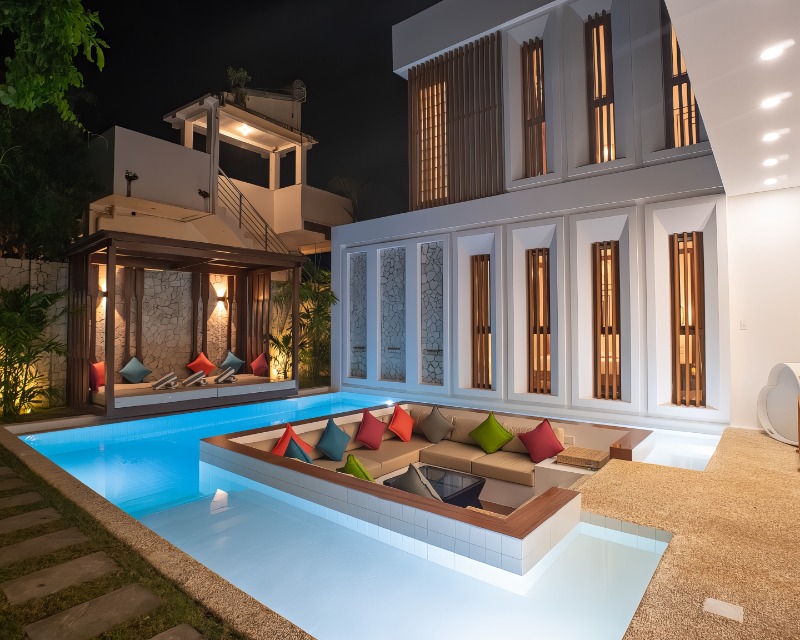
You will be home late, hot, and not wanting to go out again. That is the argument for having a kitchen and a pool waiting rather than a restaurant booking.
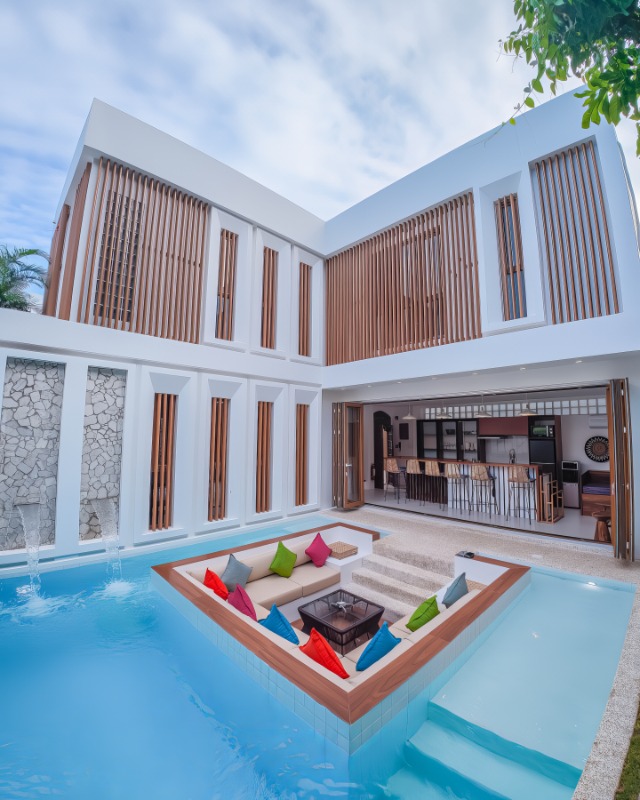
Aman Sinaya sits in Daorong, Danao, which is the Panglao end of the bridges, so you are back roughly 30 minutes before anyone staying at the far end of the island. Villa details and live dates are on the reservation page, and the attractions on Panglao itself are covered in our things to do in Panglao guide.
If you have more than one day for the mainland, the stops the standard loop skips are in Bohol beyond the countryside tour.